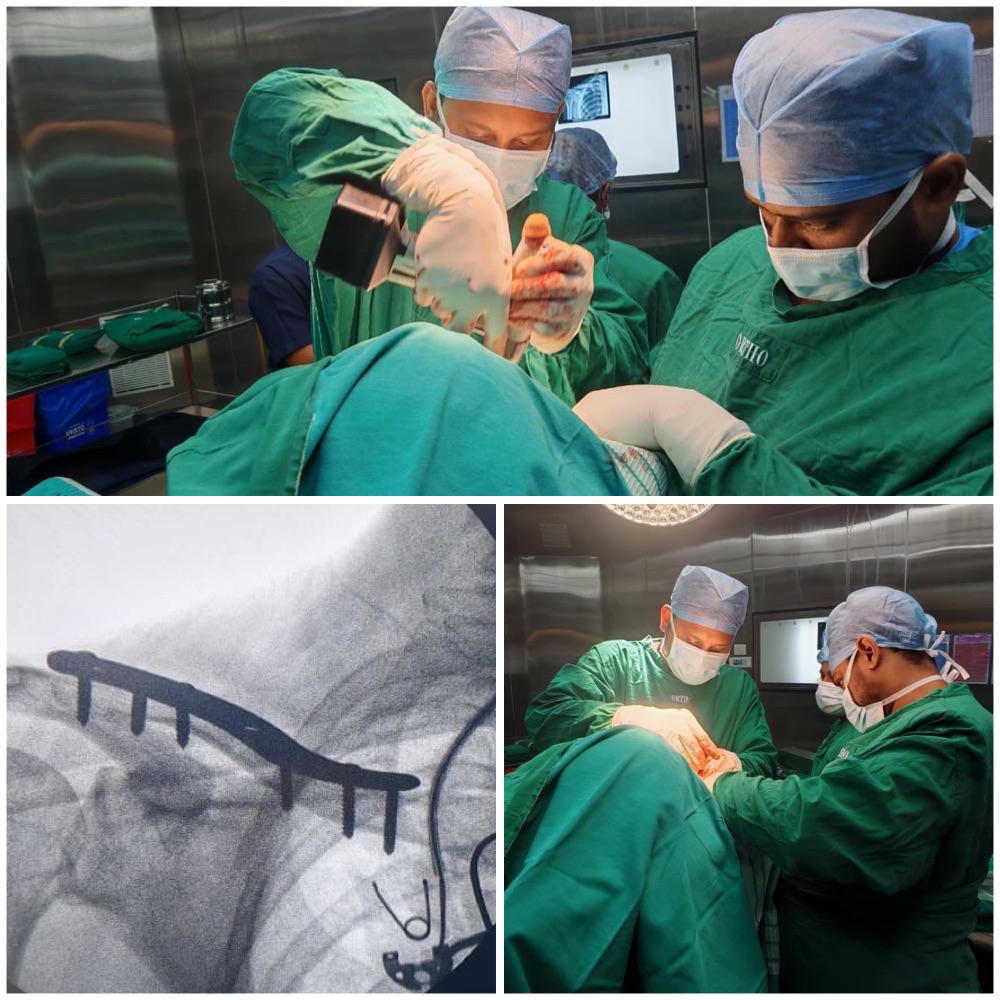
Case Presentation
A 68-year-old retired bank manager presented with severe knee pain that had progressively worsened over 8 years, significantly limiting her ability to walk, climb stairs, and enjoy her retirement activities.
Initial Assessment
- Patient: 68-year-old female, retired bank manager
- Chief Complaint: Right knee pain, swelling, stiffness
- Duration: 8 years of progressive symptoms
- Functional Impact: Unable to walk more than 50 meters, difficulty with stairs
- Previous Treatment: NSAIDs, physical therapy, viscosupplementation injections
Diagnostic Evaluation
Clinical Examination
Physical Findings:
- Gait: Antalgic gait with visible limp
- Range of Motion: Limited flexion (90 degrees) and extension (5 degrees flexion contracture)
- Joint Stability: Medial and lateral laxity present
- Deformity: Varus deformity of 15 degrees
- Effusion: Moderate joint effusion present
- Tenderness: Medial joint line tenderness
Imaging Studies
X-ray Right Knee:
- Joint Space: Complete loss of medial joint space
- Osteophytes: Large osteophytes medially and laterally
- Subchondral Sclerosis: Marked sclerosis of medial tibial plateau
- Deformity: Varus malalignment of 15 degrees
- Bone Quality: Good bone stock, no significant osteoporosis
MRI Knee (if indicated):
- Cartilage: Complete loss of articular cartilage medially
- Meniscus: Complex tear of medial meniscus
- Ligaments: Intact ACL and PCL
- Bone Marrow Edema: Extensive bone marrow changes
Treatment Decision
Indications for Surgery
Total knee replacement was recommended based on:
- Severe Pain: Uncontrolled with conservative measures
- Functional Limitation: Significant impact on daily activities
- Radiological Evidence: End-stage osteoarthritis
- Failed Conservative: Adequate trial of non-surgical treatment
- Quality of Life: Significant reduction in quality of life
Pre-operative Planning
Implant Selection:
- Type: Posterior-stabilized total knee prosthesis
- Size: Based on pre-operative measurements
- Material: Cobalt-chromium femoral component, polyethylene insert
- Fixation: Cemented fixation for immediate stability
Surgical Procedure
Pre-operative Preparation
- Medical Clearance: Comprehensive cardiac and medical evaluation
- Anesthesia: Spinal anesthesia with sedation
- Positioning: Supine position with tourniquet application
- Equipment: Total knee arthroplasty instrument set, computer navigation
Surgical Technique
Approach and Exposure:
- Incision: Midline anterior incision (15 cm)
- Arthrotomy: Medial parapatellar arthrotomy
- Patellar Management: Patellar eversion and preparation
- Exposure: Complete exposure of distal femur and proximal tibia
Bone Preparation:
- Distal Femur: Intramedullary guide for distal femoral cut
- Proximal Tibia: Extramedullary guide for tibial resection
- Patella: Resection of patellar surface
- Sizing: Appropriate sizing of femoral and tibial components
Component Implantation:
- Trial Components: Trial implants for assessment
- Range of Motion: Assessment of flexion, extension, stability
- Final Components: Cementation of femoral, tibial, and patellar components
- Polyethylene Insert: Appropriate thickness insert placement
Intra-operative Findings
- Cartilage: Complete loss of articular cartilage
- Bone Quality: Good bone stock for cement fixation
- Deformity: Significant varus deformity corrected
- Stability: Achieved excellent stability with prosthesis
Post-operative Care
Immediate Recovery
- Hospital Stay: 4 days for monitoring and rehabilitation
- Pain Management: Multimodal analgesia protocol
- Blood Loss: Minimal blood loss, no transfusion required
- Mobilization: Ambulation on postoperative day 1 with walker
Rehabilitation Protocol
Week 1-2:
- Weight Bearing: Full weight bearing as tolerated
- Range of Motion: Goal of 90 degrees flexion
- Strengthening: Quadriceps and hamstring exercises
- Gait Training: Walker to cane progression
Week 3-6:
- Range of Motion: Goal of 110-120 degrees flexion
- Strengthening: Advanced strengthening program
- Functional Activities: Stair climbing, sit-to-stand exercises
- Walking: Progress to independent ambulation
Week 6-12:
- Range of Motion: Full functional range of motion
- Activities: Return to light recreational activities
- Driving: Clearance for driving (typically 6-8 weeks)
- Sports: Low-impact sports as tolerated
Outcome and Results
3-Month Follow-up
Clinical Assessment:
- Pain: Complete resolution of arthritic pain
- Range of Motion: 115 degrees flexion, full extension
- Stability: Stable knee with no laxity
- Function: Walking unlimited distance, stair climbing without difficulty
Radiological Assessment:
- Component Position: Optimal positioning of all components
- Alignment: Neutral mechanical alignment achieved
- Fixation: No signs of loosening or subsidence
- Bone-Cement Interface: Complete incorporation
6-Month Follow-up
Patient-Reported Outcomes:
- Pain Score: Reduced from 8/10 to 1/10
- Functional Score: Significant improvement in knee scores
- Quality of Life: Return to most desired activities
- Satisfaction: Very satisfied with surgical outcome
Functional Achievements:
- Walking: Unlimited walking distance
- Stairs: Able to climb stairs normally
- Activities: Return to gardening, walking, light sports
- Independence: Full independence in daily activities
Key Surgical Principles
Total Knee Replacement Success Factors
- Proper Alignment: Mechanical axis restoration
- Component Positioning: Optimal femoral and tibial positioning
- Soft Tissue Balance: Equal flexion and extension gaps
- Patellar Tracking: Proper patellar alignment
- Fixation: Secure cement fixation
Technical Considerations
- Bone Cuts: Precise bone resection angles
- Soft Tissue: Adequate release of tight structures
- Rotation: Proper rotational alignment of components
- Sizing: Appropriate component sizing
- Range of Motion: Achieve functional range of motion
Complications and Prevention
Potential Complications
- Infection: Prosthetic joint infection
- DVT/PE: Deep vein thrombosis or pulmonary embolism
- Stiffness: Arthrofibrosis limiting motion
- Loosening: Aseptic loosening of components
- Neurovascular Injury: Nerve or blood vessel injury
Prevention Strategies
- Antibiotics: Prophylactic antibiotic administration
- DVT Prophylaxis: Mechanical and chemical prophylaxis
- Early Mobilization: Prevent stiffness and complications
- Proper Technique: Meticulous surgical execution
- Patient Selection: Appropriate candidate identification
Long-term Results
Expected Outcomes
- Survivorship: 95% survivorship at 15 years
- Pain Relief: 90% success rate for pain reduction
- Function: Significant improvement in knee function
- Durability: Long-lasting results with proper technique
Lifestyle Modifications
- Activity Recommendations: Low-impact activities preferred
- Weight Management: Maintain healthy body weight
- Regular Exercise: Strengthening and flexibility exercises
- Follow-up: Regular orthopedic follow-up visits
Patient Education
Pre-operative Counseling
- Expectations: Realistic goals for recovery
- Risks: Potential complications and their management
- Rehabilitation: Importance of postoperative therapy
- Long-term Care: Lifetime care of prosthetic joint
Post-operative Instructions
- Activity Progression: Gradual return to activities
- Wound Care: Proper incision care and monitoring
- Warning Signs: When to seek immediate medical attention
- Long-term Follow-up: Regular monitoring schedule
Success Metrics
Clinical Success Indicators
- Pain Relief: Significant reduction in knee pain
- Functional Improvement: Return to desired activities
- Range of Motion: Functional range of motion achieved
- Patient Satisfaction: High patient satisfaction scores
Radiological Success Indicators
- Component Position: Optimal positioning maintained
- Alignment: Neutral alignment preserved
- Fixation: No evidence of loosening
- Bone Quality: Good bone maintenance around components
This case demonstrates successful management of end-stage knee osteoarthritis through total knee replacement surgery. The outcome highlights the importance of proper patient selection, meticulous surgical technique, and comprehensive rehabilitation for optimal long-term results.
For expert evaluation and treatment of knee arthritis and joint replacement, contact VPL Ortho and Spine Clinic at +91 9042353157.