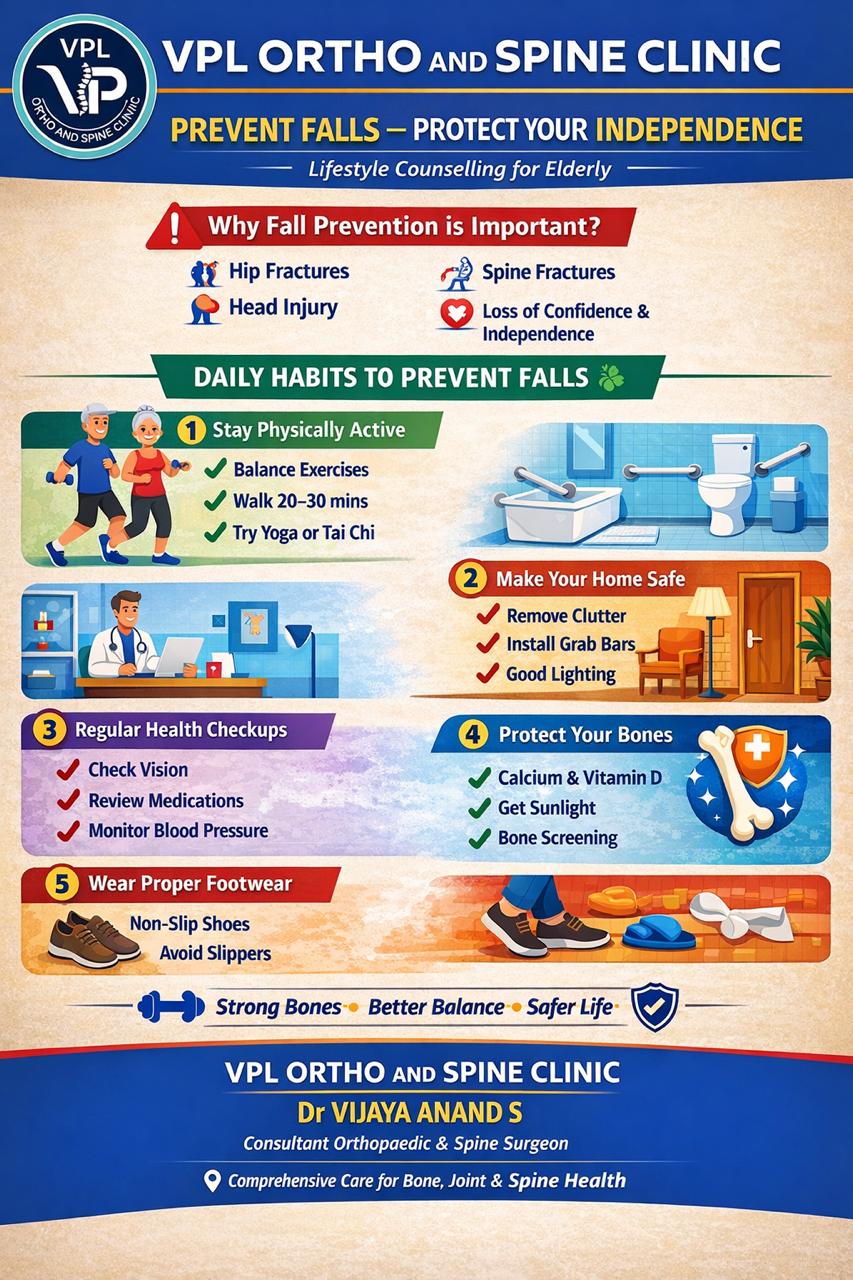
Why Fall Prevention Matters
Falls are a leading cause of injury, especially among older adults. According to studies, one in four adults aged 65 and older falls each year. Falls can lead to serious injuries, including fractures, head injuries, and reduced quality of life. The good news is that most falls are preventable.
Who is at Risk?
High-Risk Groups:
- Adults over 65 years old
- People with balance or walking problems
- Those taking multiple medications
- Individuals with vision problems
- People with chronic conditions (diabetes, heart disease)
- Those with previous fall history
Home Safety Modifications
Remove Hazards
- Clear pathways: Remove clutter, cords, and rugs
- Secure carpets: Use non-slip backing or double-sided tape
- Fix uneven surfaces: Repair cracked walkways and stairs
- Adequate lighting: Install night lights and bright bulbs
- Bathroom safety: Install grab bars and non-slip mats
Essential Safety Equipment
- Grab bars: In bathrooms near toilet and shower
- Handrails: On both sides of staircases
- Non-slip mats: In bathroom and shower
- Raised toilet seat: If mobility is limited
- Shower chair: For those with balance issues
Physical Conditioning
Balance Exercises
- Tai Chi: Improves balance and reduces fall risk
- Yoga: Enhances flexibility and stability
- Standing on one leg: Simple balance exercise
- Heel-to-toe walking: Improves coordination
Strength Training
- Leg exercises: Squats, lunges, calf raises
- Core strengthening: Planks, bridges
- Resistance training: Using bands or light weights
Flexibility
- Regular stretching: Maintains range of motion
- Gentle yoga: Improves flexibility safely
Medical Considerations
Medication Review
- Consult your doctor: Review all medications regularly
- Be aware of side effects: Dizziness, drowsiness
- Time medications: Take when you can rest afterward
- Avoid alcohol: Can increase fall risk with medications
Vision Care
- Regular eye exams: At least annually
- Update prescriptions: Correct vision problems
- Use proper lighting: Ensure adequate illumination
- Clean glasses: Keep lenses clean and scratch-free
Foot Health
- Proper footwear: Supportive, non-slip shoes
- Avoid walking barefoot: Especially on smooth surfaces
- Check foot problems: Corns, calluses, nail issues
- Custom orthotics: If recommended by doctor
Lifestyle Modifications
Daily Habits
- Get up slowly: From bed or chairs to avoid dizziness
- Use assistive devices: Canes or walkers if needed
- Stay hydrated: Dehydration can cause dizziness
- Regular exercise: Maintain strength and balance
Nutrition
- Adequate calcium: For bone health
- Vitamin D: Essential for bone strength
- Protein: Maintains muscle mass
- Stay hydrated: Prevents dizziness
What to Do If You Fall
If you fall and can get up:
- Take deep breaths to stay calm
- Check for injuries before moving
- Roll onto your side and push up to hands and knees
- Crawl to a sturdy chair
- Place hands on chair and slide one foot forward
- Slowly stand up
If you fall and can't get up:
- Call for help immediately
- Try to move to a more comfortable position
- Keep warm with nearby blankets or clothing
- Don't try to stand if injured
When to Seek Medical Attention
After a fall, see a doctor if you:
- Hit your head or feel confused
- Have severe pain
- Can't move or bear weight
- Have obvious injuries or bleeding
- Feel dizzy or nauseous
Remember, fall prevention is a team effort involving you, your family, and healthcare providers. Taking these preventive steps can significantly reduce your risk of falls and maintain your independence.
For personalized fall risk assessment and orthopedic care, contact VPL Ortho and Spine Clinic at +91 9042353157.