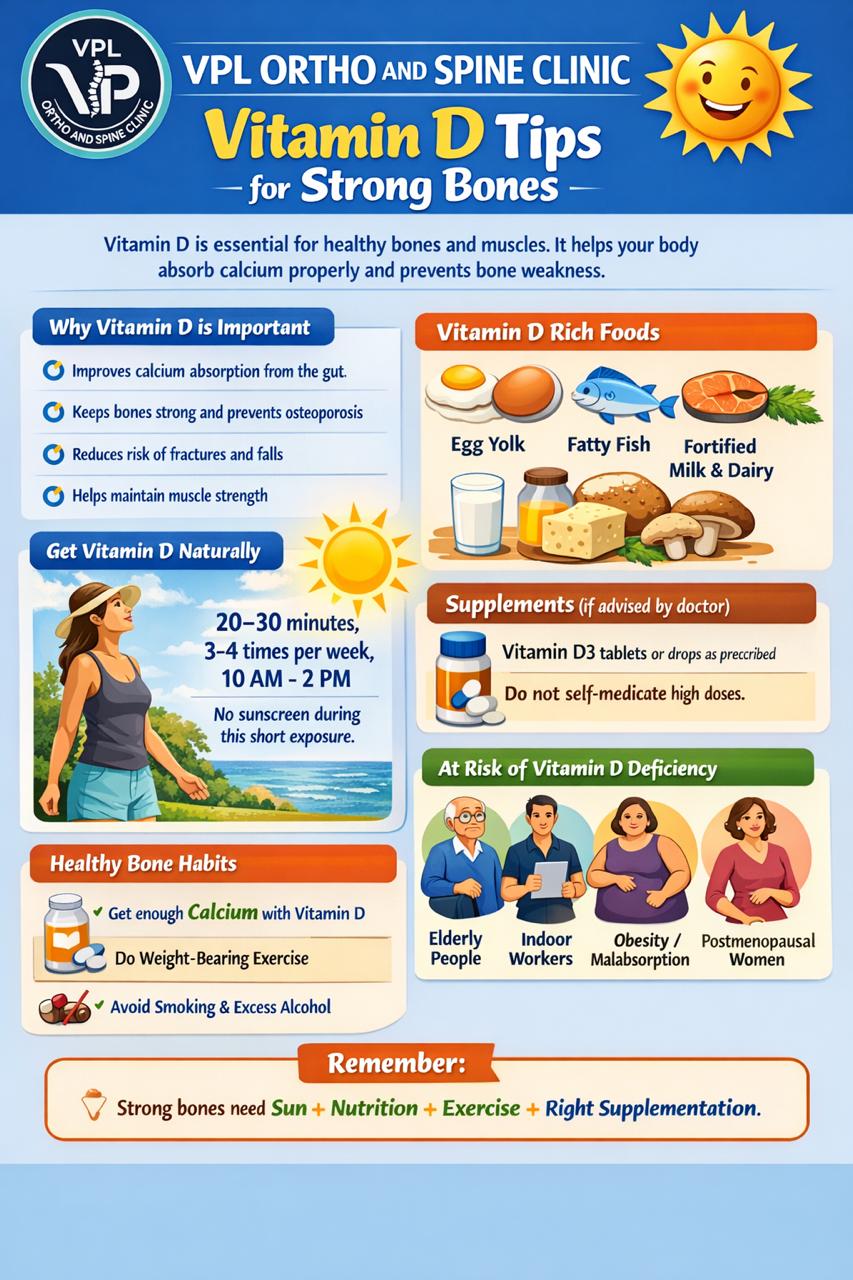
Understanding Vitamin D
Vitamin D, often called the "sunshine vitamin," is a fat-soluble vitamin that plays a crucial role in bone health and overall wellness. Unlike other vitamins, our body can produce vitamin D when exposed to sunlight, making it unique among essential nutrients.
Why Vitamin D Matters for Bone Health
Key Functions:
- Calcium Absorption: Helps your body absorb calcium from food
- Bone Mineralization: Essential for building strong bones
- Muscle Function: Supports muscle strength and balance
- Immune Support: Boosts immune system function
- Inflammation Reduction: Helps control inflammatory responses
Vitamin D Deficiency: A Silent Epidemic
Common Risk Factors:
- Limited sun exposure (indoor lifestyle, office work)
- Darker skin tones (less efficient vitamin D production)
- Older age (skin becomes less efficient at producing vitamin D)
- Certain medical conditions (celiac disease, Crohn's disease)
- Obesity (vitamin D gets sequestered in fat tissue)
- Certain medications (anti-seizure drugs, steroids)
Symptoms of Deficiency:
- Bone pain and muscle weakness
- Fatigue and tiredness
- Depression or mood changes
- Slow wound healing
- Hair loss
- Increased susceptibility to infections
Sources of Vitamin D
Sunlight Exposure
- Best Source: 15-20 minutes of midday sun exposure
- Optimal Time: 10 AM to 3 PM
- Skin Exposure: Face, arms, legs without sunscreen
- Seasonal Variation: Winter months reduce vitamin D production
- Geographic Factors: Less UVB in northern latitudes
Food Sources
Natural Sources:
- Fatty fish (salmon, mackerel, sardines)
- Egg yolks
- Beef liver
- Cheese
Fortified Foods:
- Milk and dairy products
- Orange juice
- Breakfast cereals
- Plant-based milk alternatives
Supplements
- Vitamin D3: More effective than D2
- Dosage: 800-2000 IU daily for most adults
- Prescription: Higher doses available for deficiency
- Absorption: Take with fat-containing meal
Recommended Daily Intake
Age Groups:
- Infants 0-12 months: 400 IU
- Children 1-18 years: 600 IU
- Adults 19-70 years: 600 IU
- Adults 71+ years: 800 IU
- Pregnant/Breastfeeding: 600 IU
Higher Doses May Be Needed For:
- Obesity
- Malabsorption conditions
- Certain medications
- Dark skin pigmentation
- Limited sun exposure
Testing and Diagnosis
When to Test:
- Risk factors for deficiency
- Symptoms of low vitamin D
- Bone density concerns
- Before starting high-dose supplements
Blood Test:
- 25-hydroxyvitamin D (25(OH)D)
- Levels below 20 ng/mL indicate deficiency
- Levels 21-29 ng/mL indicate insufficiency
- Levels 30+ ng/mL are considered sufficient
Vitamin D and Bone Conditions
Osteoporosis
- Prevention: Adequate vitamin D reduces fracture risk
- Treatment: Essential component of osteoporosis management
- Synergy: Works with calcium for optimal bone health
Osteomalacia
- Adult Condition: Softening of bones due to vitamin D deficiency
- Symptoms: Bone pain, muscle weakness, increased fracture risk
- Treatment: High-dose vitamin D supplementation
Rickets
- Childhood Condition: Improper bone mineralization
- Prevention: Adequate vitamin D during pregnancy and childhood
- Treatment: Vitamin D and calcium supplementation
Special Considerations
Pregnancy and Breastfeeding
- Fetal Development: Critical for baby's bone formation
- Maternal Health: Prevents pregnancy complications
- Breast Milk: Vitamin D content depends on maternal levels
Elderly Population
- Fall Prevention: Reduces fall risk through muscle strength
- Fracture Protection: Decreases hip fracture risk
- Cognitive Health: May support brain function
Chronic Conditions
- Diabetes: May improve insulin sensitivity
- Heart Disease: Potential cardiovascular benefits
- Autoimmune Disorders: May modulate immune responses
Safety and Toxicity
Upper Safe Limits:
- Adults: 4,000 IU daily
- Children: Varies by age
- Toxicity: Rare, usually from excessive supplementation
Symptoms of Excess:
- Nausea and vomiting
- Constipation
- Weakness
- Kidney stones
- High blood calcium levels
Practical Tips for Optimal Vitamin D
Daily Habits
- Morning Sun: 10-15 minutes of morning sun exposure
- Outdoor Activities: Regular outdoor exercise
- Window Time: Sit near windows for indirect sun exposure
- Diet: Include vitamin D-rich foods regularly
Seasonal Strategies
- Summer: Build up vitamin D stores
- Winter: Consider supplementation
- Cloudy Days: May need extra supplementation
- High Latitudes: Year-round supplementation often needed
When to Consult Your Doctor
Seek medical advice if you:
- Have symptoms of vitamin D deficiency
- Have risk factors for deficiency
- Are considering high-dose supplements
- Have chronic medical conditions
- Are pregnant or breastfeeding
- Have been diagnosed with osteoporosis
Remember, vitamin D is essential for bone health and overall wellness. Maintaining adequate levels through sun exposure, diet, and supplementation when necessary can help prevent bone problems and support your overall health.
For personalized vitamin D assessment and bone health evaluation, visit VPL Ortho and Spine Clinic. Call +91 9042353157 to schedule your appointment.